
MEP Engineering
Evolution of Healthcare MEP: Why "Speed-to-Care" Demands Smarter Infrastructure Design
EvaE Consulting · · 1 min read
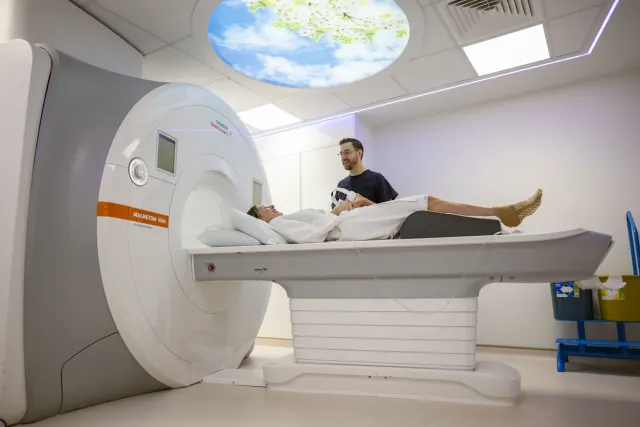
Healthcare construction is undergoing a massive operational transformation. As recent market insights from medical infrastructure reports outline, health systems are moving aggressively to balance rising capital investments with unprecedented demands for rapid project delivery, clinical flexibility, and stringent infection control.
As recent sector analyses highlight regarding modern facility delivery hurdles:
"Healthcare owners are no longer measuring projects by cost alone. They are evaluating them through a much wider lens of speed-to-care, campus disruption, operational flexibility, long-term performance, and the ability to support future technology demands."
For MEP engineering, this macro-shift away from traditional, siloed construction models toward accelerated "speed-to-care" requires a fundamental rethink of how medical spaces are serviced:
⚡ Prefabricated MEP Racks & Modular Assemblies: With prefabrication shifting from a production tactic to a core scheduling hedge, complex MEP corridor racks and technical plant skids are moving off-site into controlled environments to compress hospital build timelines by months.
🦠 Resilient Airhandling & Clinical Zoning: Evolving infection control demands mean that HVAC design, negative/positive pressure zoning, and filtration protocols must integrate seamlessly with clinical workflows without restricting active, live-hospital operations.
🔌 Future-Proofed Infrastructure Backbones: Because modern medical technology and digital workflow investments consume a massive share of capital expenditure, building services must provide redundant power systems, high-capacity pathways, and modular room adaptability for tomorrow's medical advancements.
We have all been there: mapping out a high-tech diagnostic suite, such as designing an MRI room intended to accommodate systems from three different global supplier - each with vastly different cooling loads, quench pipe routing paths, electrical demands, and shielding criteria - while factoring in a wishlist of future alternative machines for subsequent clinical phases.
Treating the room layout as a rigid, single-vendor box simply doesn't work when equipment cycles move faster than construction schedules. True healthcare engineering agility means merging diverse manufacturer requirements to deliver a flexible, multi-vendor room - future-proofing the space to effortlessly accommodate current technology and whatever next-generation machinery the client brings in tomorrow.
Related insights

Net Zero Retrofit Is an Engineering Exercise, Not a Plant Replacement Exercise
Net Zero Retrofit Is an Engineering Exercise, Not a Plant Replacement Exercise The easiest way to sell building decarbonisation is to talk about what gets bolted to the floor. Gas boilers become heat…
· 11 min read
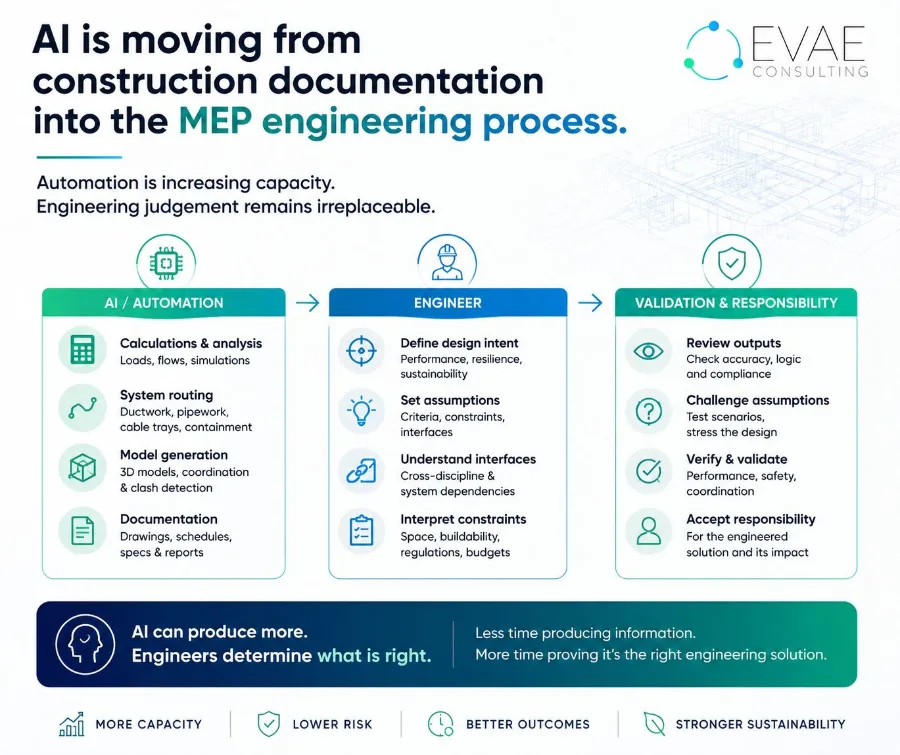
AI is moving from construction documentation into the MEP engineering process
For years, much of the discussion around AI in construction has focused on documentation, information retrieval and administrative efficiency. That is changing. Platforms such as Endra are now…
· 1 min read

World Green Building Week 2026: Are we measuring the building we designed — or the building we actually operate?
The upcoming World Green Building Week 2026 is a useful reminder that the next challenge for the built environment is not simply designing more sustainable buildings. It is delivering buildings that…
· 1 min read