
MEP Engineering
AI is moving from construction documentation into the MEP engineering process
The opportunity is not to remove engineering judgement from the process. It is to remove as much repetitive engineering production as possible so that more engineering judgement can be applied where it actually matters.
EvaE Consulting · · 1 min read
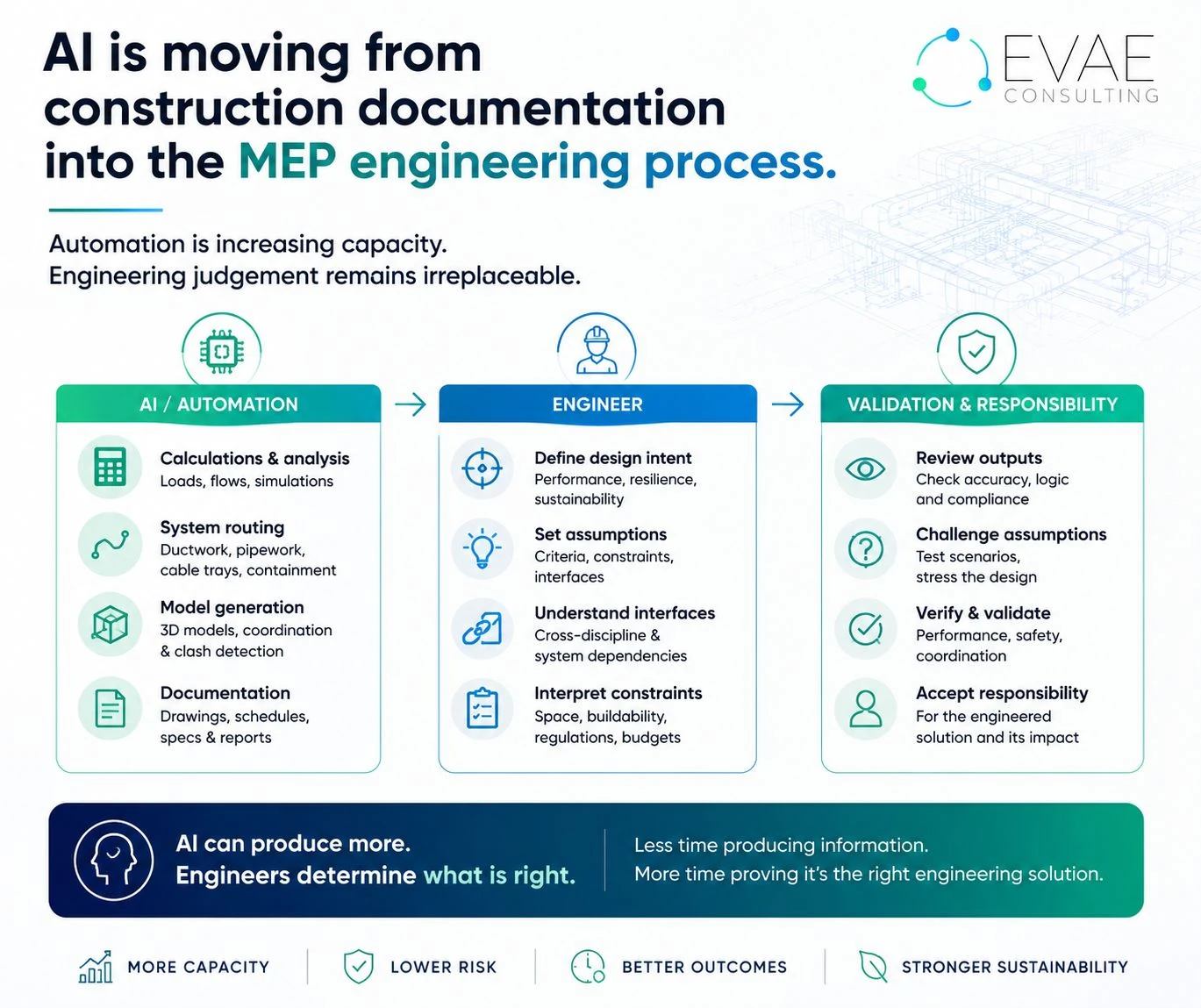
For years, much of the discussion around AI in construction has focused on documentation, information retrieval and administrative efficiency. That is changing.
Platforms such as Endra are now targeting much deeper parts of the MEP workflow, including calculations, equipment sizing, system routing, model generation and production documentation. Endra recently announced a $50m Series A led by Andreessen Horowitz, while the company claims that its platform can reduce the time required to produce a code-compliant electrical design for a 500,000 sq ft commercial building from around two months to less than a day. That is a company claim rather than an independently verified benchmark, but the direction of travel is difficult to ignore.
The more important question is therefore not whether AI can replace engineers. The evidence does not support that conclusion. It is whether the boundary between engineering production and engineering judgement is beginning to move. If AI can increasingly perform repetitive calculations, routing, model generation and documentation, the value of the engineer does not disappear. It shifts further towards defining design intent, challenging assumptions, understanding interfaces and constraints, validating outputs and ultimately accepting responsibility for whether the proposed system is actually the right engineering solution.
That distinction becomes particularly important as project complexity continues to increase across data centres, electrification, healthcare and other technically demanding sectors, while specialist engineering capacity remains constrained. Recent industry reporting is already highlighting significant shortages in specialist MEP capability within the data-centre build-out.
The opportunity is not to remove engineering judgement from the process. It is to remove as much repetitive engineering production as possible so that more engineering judgement can be applied where it actually matters.
That could fundamentally change how MEP consultancies structure their teams, develop designs and manage technical risk. The future MEP engineer may spend less time producing design information, and more time proving that the information represents the right engineering solution.
Related insights
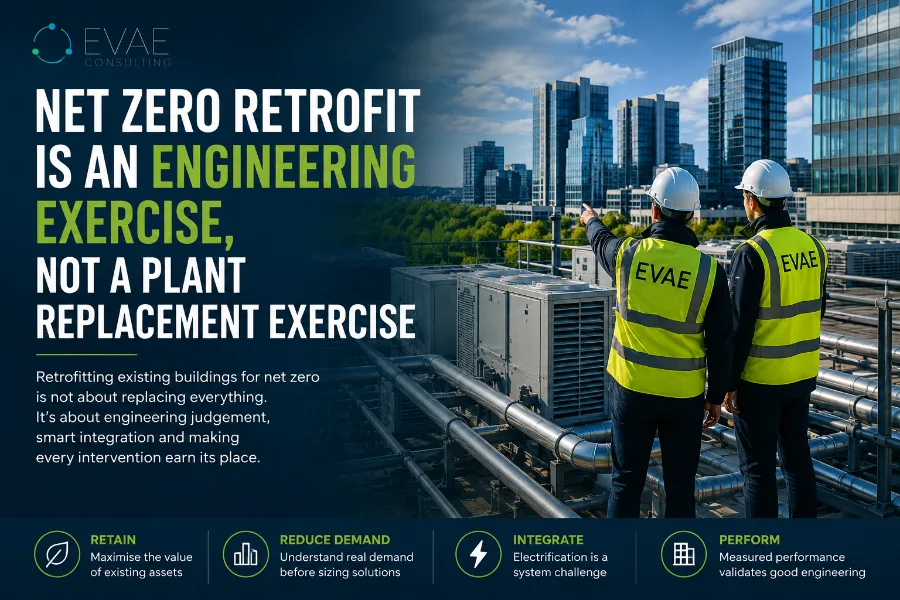
Net Zero Retrofit Is an Engineering Exercise, Not a Plant Replacement Exercise
Net Zero Retrofit Is an Engineering Exercise, Not a Plant Replacement Exercise The easiest way to sell building decarbonisation is to talk about what gets bolted to the floor. Gas boilers become heat…
· 11 min read
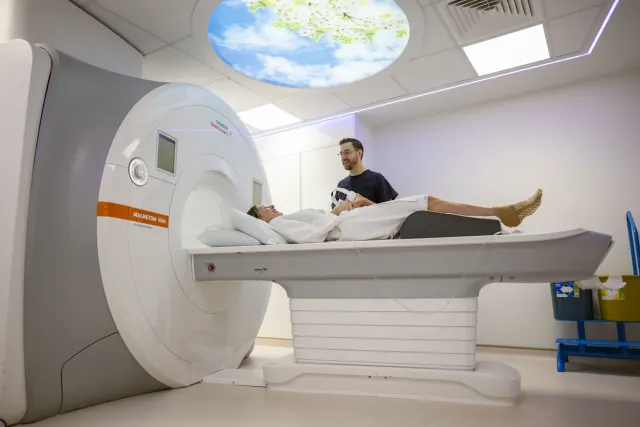
Evolution of Healthcare MEP: Why "Speed-to-Care" Demands Smarter Infrastructure Design
Healthcare construction is undergoing a massive operational transformation. As recent market insights from medical infrastructure reports outline, health systems are moving aggressively to balance…
· 1 min read

World Green Building Week 2026: Are we measuring the building we designed — or the building we actually operate?
The upcoming World Green Building Week 2026 is a useful reminder that the next challenge for the built environment is not simply designing more sustainable buildings. It is delivering buildings that…
· 1 min read